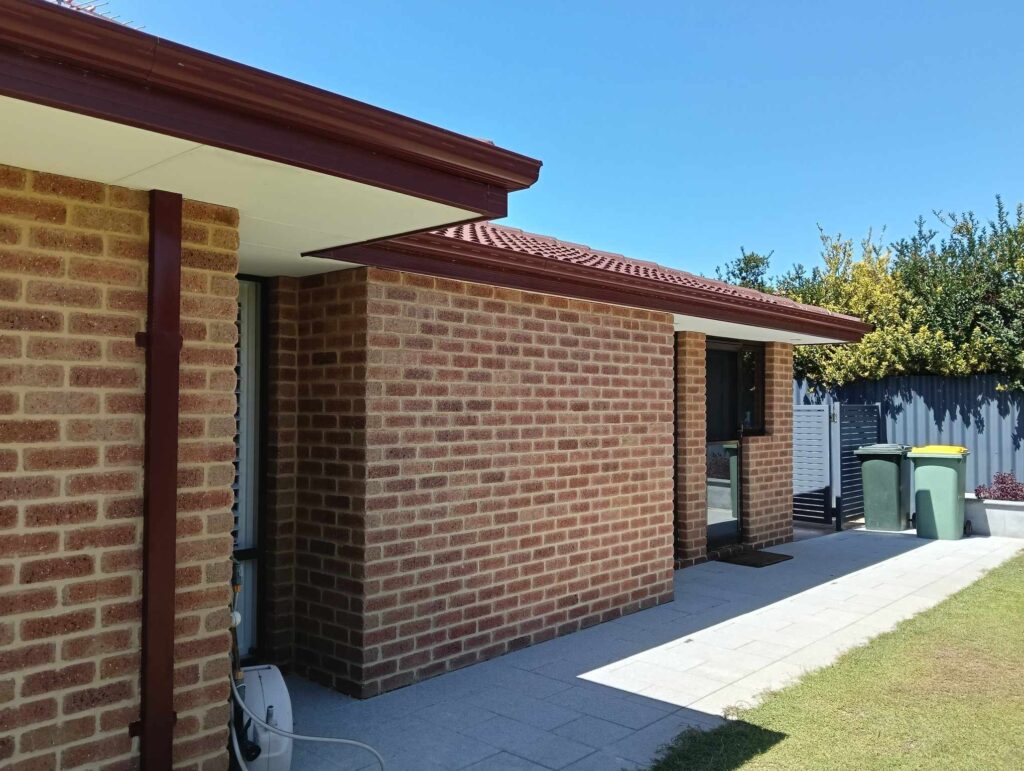
If you’ve started looking into fixing the mortar on your brick walls, you’ve probably run into two terms that sound like they mean the same thing: repointing vs tuck pointing. They get used interchangeably all the time, even by tradespeople, but they’re actually two very different jobs. One is about keeping your walls sound and weatherproof. The other is a specialist decorative finish that most homes never need.
Getting the two confused can cost you money, either by paying for a fancy finish you didn’t want, or by hiring the wrong specialist for the job in front of you. So here’s a plain-English breakdown of what each one is, how they differ, and how to work out which your brickwork needs.
What is repointing?
Repointing is the repair and renewal of the mortar joints between your bricks. Over time, the mortar that fills those joints breaks down. Rain, salt, frost, and general age cause it to crumble, crack, and fall away in a process bricklayers call fretting. Once the mortar starts to go, water gets behind the brickwork, and that’s when small problems turn into expensive ones: damp, spalling bricks, and in bad cases, structural movement.
Repointing fixes this. A tradesperson rakes out the old, failed mortar to a consistent depth, then refills the joints with fresh mortar matched to the original in colour, strength, and profile. Done properly, it restores the weather seal, stops water getting in, and can add decades to the life of a wall. It’s a maintenance and protection job first, with the tidy, refreshed look being a welcome bonus.
If your mortar is crumbling, gappy, or visibly worn, brick repointing is almost certainly what you’re after.
Tuck pointing is a decorative technique, not a structural repair. It was developed centuries ago to make ordinary brickwork look like expensive, precisely cut brick with very fine joints. The method uses two contrasting colours of mortar: a base mortar coloured to match the bricks, into which a thin, raised ribbon of fine white or light-coloured material (the “tuck”) is set to create the illusion of a crisp, narrow joint.
The result is a high-end, very neat appearance that you’ll mostly see on heritage homes, period facades, and restoration projects where preserving the original look matters. It’s skilled, fiddly, slow work, and it’s a specialist trade in its own right.
The important thing to understand is that tuck pointing is about appearance. It doesn’t do anything extra for the strength or weatherproofing of a wall that good repointing wouldn’t do. Unless you specifically want that traditional, ornamental finish, usually for heritage reasons, it’s not something you need.
Brick Repointing vs Tuck pointing
Brick Repointing: functional
It replaces failed mortar to protect and strengthen the wall, and it suits the vast majority of homes. It’s the standard fix for worn, crumbling, or leaking joints.
- Is the mortar crumbling, cracked, powdery, or falling out of the joints?
- Are there gaps where water could get in?
- Is the wall looking tired and the joints recessed or eroded?
Tuck pointing: decorative
It creates a fine, two-tone ornamental joint to mimic premium brickwork, and it’s mainly used on heritage and period properties for the look. It’s a specialist finish rather than a repair.
- Are your walls structurally fine, but you want to recreate or preserve a specific ornamental joint finish on a heritage or period building?
At MortarFix we focus on brick repointing, brick repair, and mortar restoration for Perth homes, which covers what the large majority of brickwork actually needs. We don’t offer tuck pointing, so if your project genuinely calls for that decorative heritage finish, a specialist in that craft is the right call. But if your mortar is worn, cracked, or letting water in, that’s exactly the work we do every day.
Still not sure? Get it looked at.
If you’ve read this far and you’re still not certain what your walls need, that’s completely normal, and it’s exactly the kind of thing worth a proper look rather than a guess. If you’re in the Perth Metro area, we’re happy to assess your brickwork and tell you honestly what it needs, whether that’s repointing, brick repair, or simply reassurance that it’s fine for now.